Golden rules for an orchestra‘”There are two golden rules for an orchestra: start together and finish together. The public doesn’t give a damn what goes on in between.” – Thomas Beecham, conductor. Cited at: Quotationsbook
Bruckner the countAnton Bruckner developed a condition call numeromania that compelled him to count everything – cathedral gables, stars, leaves on the trees; even the number of bars in his lengthy symphonies. Source: Lawrence, Christopher (2001) Swooning. Sydney: Random House, p.70.
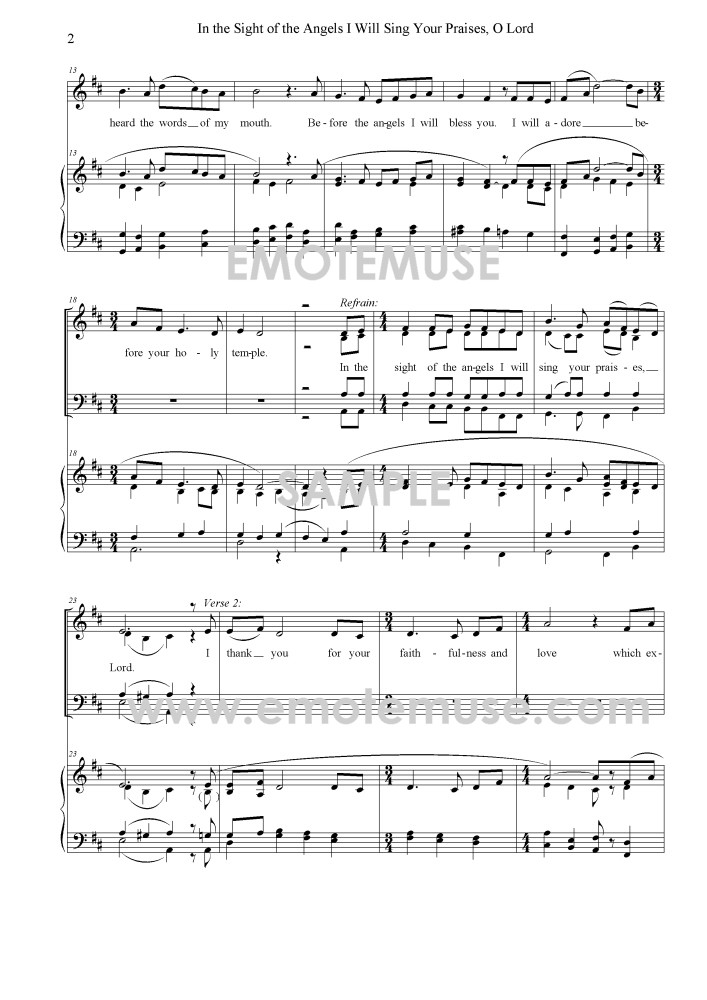
Golliwog’s Cakewalk from Children’s Corner Suite (Debussy)Title: Golliwog’s Cakewalk (from Children’s Corner Suite) Composer: Claude Debussy Arranger: Greg Smith Instrumentation: Cello quartet Product medium: PDF score and parts Sample:
The potential of man“It is surprising what a man can do when he has to, and how little most men will do when they don’t have to.” — Walter Linn The Signalman’s Journal, Brotherhood of Railroad Signalmen, vol. 29-30, 1948, p.188.
Stanford on Tchaikovsky“Tchaikovsky reminded me, in more ways than one, of his countryman Tourgéniew, whom I once met at Madame Viardot’s. He had none of the Northern roughness, was as polished as a Frenchman in his manner, and had something of the Italian in his temperament… For all the belief which he had in himself, he was […]
Bernstein’s television appearancesBernstein is intent on demonstrating that the inevitable doesn’t just happen. It comes from intense work. To show this, he restores a handful of Beethoven’s discarded sketches to the score so that we can hear how the Fifth would have sounded if Beethoven had retained his first (or second or 10th) thought. Some discarded passages […]
Arthur Rubinstein’s youthful practice habitsInterviewer: So many children hate to take music lessons. Can you understand this? Rubinstein: Oh, yes, I was one of them. You see, music lessons mean always this horrible dictatorial attitude of the professors. They slap four fingers and aarh; they shout at you: “Can’t you learn that? You must practice scales!” I mean, it […]
Silence, slowness, clarity, reinvigorate“No matter if you’re an artist, a desk jockey, or anything in between – give yourself permission to include regular (dare I say daily?) reinvigoration in your work ethic. Silence. Slowness. Clarity. The machine doesn’t work so well without them.” Kim Pensinger, from Living and Singing on Interest in the WTO Blog
The development of keyboard techniqueBefore the time of Bach, keyboardists would often only use the middle three fingers of each hand and tended to keep their hands flat. Bach taught his students under the new principle of using all the fingers. Beethoven asked his pupils to curve the hand. Source: Marek, George (1969) Beethoven: Biography of a Genius. London: William […]
A bewitched recordingEarly phonograph recordings were a little rough. In 1889, pianist Hans von Bülow was asked to play into a phonograph in America: After playing upon a pianoforte, from which issued sounds compared to the soft and dreamy gurgle of a brook, the far-off sighign of the night wind and the roar of the cataract, he […]